UL325 Safety Compliance
Inspection, testing, and compliance to bring your automated gate up to UL325 safety standards — protecting people, vehicles, and your property from liability.
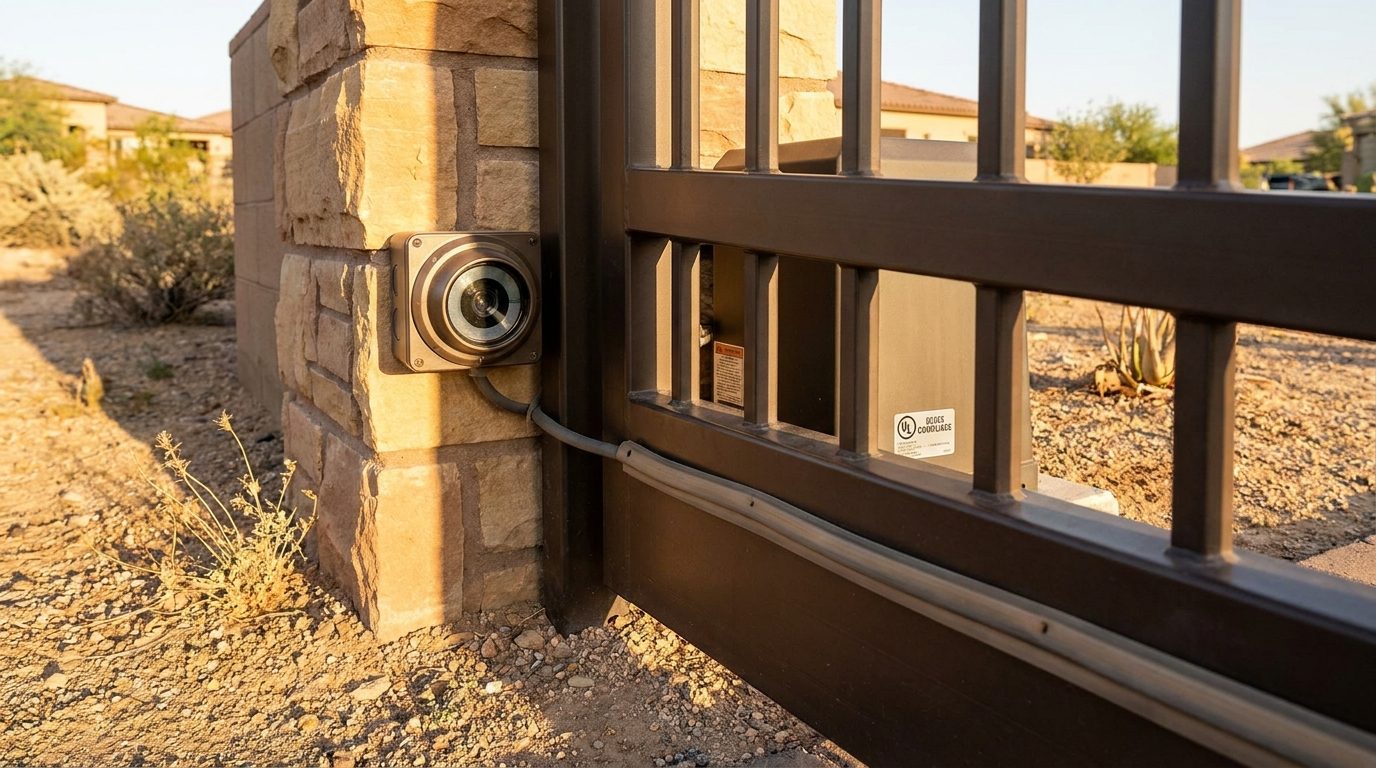
An automated gate is a powerful machine, and when its safety systems aren't right, it's a serious hazard — and a serious liability. UL325 is the safety standard that governs how automatic gate operators must detect and prevent entrapment. Gate Access Services inspects, tests, and brings gate systems into UL325 compliance for commercial, HOA, and residential properties across Henderson and Clark County — so your gate is safe and you're protected.
What UL325 Covers
The standard is about one thing: making sure a closing or opening gate can't trap a person or vehicle — so safety devices actually perform when triggered. Compliance typically involves:
- Entrapment-protection devices — photo eyes, safety edges, and safety loops that stop or reverse the gate
- Proper operator type & class — matched to how and where the gate is used
- Correct wiring & controls — so safety devices properly activate when triggered
- Guarding & exposed hazards — reducing pinch points and reach-through risk
- Warning signage — required labels at the gate
Why It Matters for Commercial & HOA Properties
For commercial and HOA gates, UL325 compliance isn't optional — it's an expectation of insurers, inspectors, and the law. A non-compliant gate that injures someone can expose the property owner or association to significant liability. Getting it right protects residents and visitors first, and protects you from what happens when a gate fails on someone.
Inspection, Correction & Compliance
We inspect your existing gate against current UL325 requirements, identify exactly what's missing or misconfigured, and correct it — adding or repairing safety devices, reworking controls, and testing the whole system under real conditions. You get a gate that passes, and documentation that shows it.
What's Included
Safety Inspection
A full assessment of your gate against current UL325 requirements, with a plain-language list of what needs to change.
Corrections & Devices
Install and repair of photo eyes, safety edges, and controls, plus fixes to wiring and guarding to close the gaps.
Testing & Documentation
Real-condition testing of every safety device, with documentation that your system meets the standard.